What did fashion have to do with anything?
The largest contributor to the division of women in Early Modern England was through clothing. The style of dress, the fabrics used, the colour of dress… Every aspect of what women wore everyday played an immense role in which women interacted with one another. The importance of what you wore became evident towards the end of the sixteenth century due to economic expansions. Meaning that your position in social class systems now relied greatly on what you chose to present yourself through clothing. The introduction of the Statute of Apparel from Elizabeth I, that further pushed for the social dependancy on clothing.
Elite Women’s Fashion Characteristics:
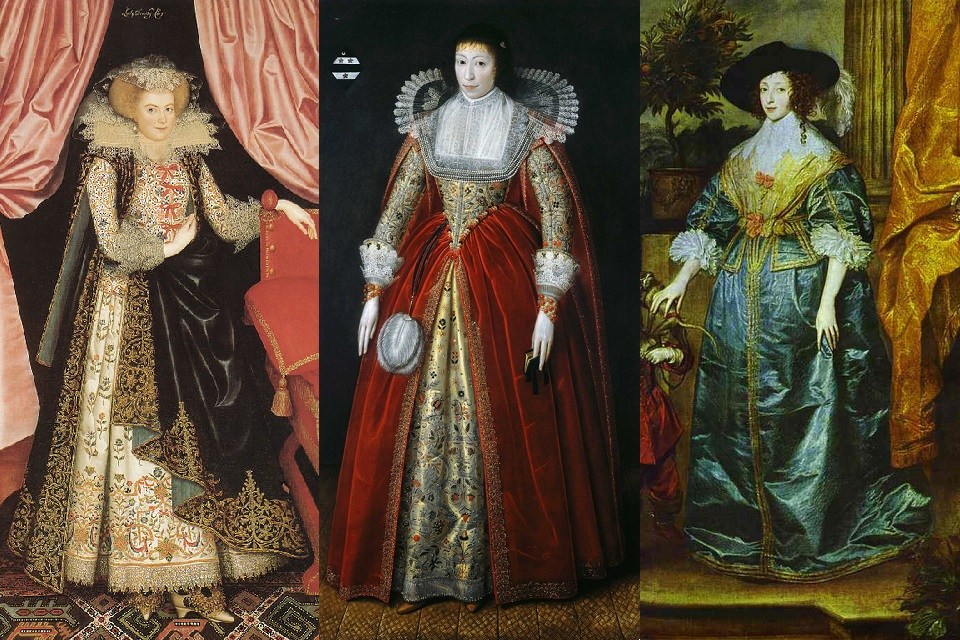
Elite women in society had much more freedom with fashion compared to other classes, due to their power in society in addition to the fact that these women were able to afford the work of designers, they were in a position where they could express themselves through their clothing. These wealthy individuals sought social distinction through the the materials of the clothes as well as the way it was produced. Women of wealth had the opportunity to collaborate with tailors and designers during the process of making their piece, while women of lower class were hand crafting their own clothes with less luxurious materials. The elite class could be identified by their clothing through:
- The weaving techniques used as the more complex the weaving pattern got, the wealthier they were.
- Embellishments on dresses were used as a tactic to show wealth through fashion.
- High neck collared ruffles was a trend for higher class women to portray their wealth. This trend began with Elizabeth I who used lace as a high neckline for her dresses.
- By mid 1630s “virago” sleeves, described as puffed long sleeves on a dress, were reserved for high class women.
- Pearls as jewelry or worn on a dress was the most known characteristic to distinguish a woman’s wealth.
Lower Class Women’s Fashion Characteristics:
In contrast to elite fashion trends, women of the lower classes or peasant class in Early Modern England had very limited freedom with their choice of dress. The lower class of England’s clothing style throughout the seventeenth century remained relatively the same due to the fact that they were unable to afford a variety of materials to create different clothing pieces.
In accordance to the Statute of Apparel, issued by Elizabeth I, the peasantry were forbidden to wear gold, jewels, embellishments or rich fabrics. These pieces of fashion were primarily reserved for royalty or the elite class. Meaning if you were seen without those mentioned above, you would be recognized as lower class. Women of lower class were required to have their hair covered at all times while in public, ascribed by the Stature of Apparel. A “coif” was required to be used to cover the hair under a bonnet. It was common for lower class women to wear dresses that were ankle length with a full skirt and fitted, lace bodice. An apron was worn in addition to the dress, primarily to keep it clean while completing jobs that could possibly dirty the dress. Women who were “better-off” within the lower class wore an open gown on top of the dress, this was a variation of dress reserved specially for these women.
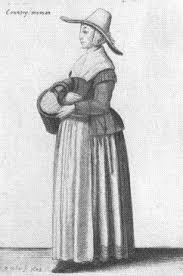
With that said, what has been mentioned above is all women of lower class in Early Modern England were able to wear. As a result of the lack of wealth, it was common to wear a smock and night cap to bed while higher class individuals wore proper nightwear.
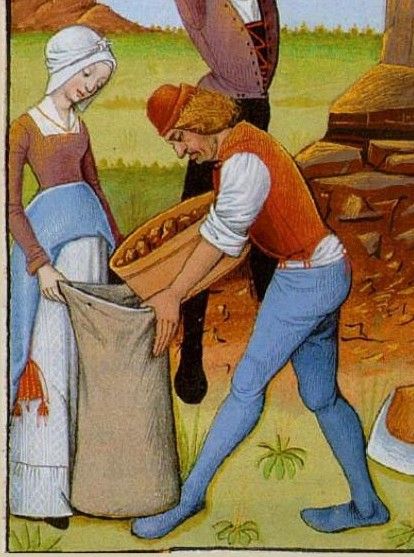
With all things considered, it would be apparent within Early Modern English society to recognize a woman of wealth versus a woman of lower class due to the characteristic of dress mentioned above. Given the drastic difference between the two in addition to the Sumptuary Law in place, you were able to be recognizable of your class as a result of your clothing.
Bibliography:
Backhouse, Clare. Fashion and Popular Print in Early Modern England : Depicting Dress in Black-letter Ballads. London: I.B. Tauris &, 2017.
Edwards, Lydia. How to Read a Dress: A Guide to Changing Fashion from the 16th to the 20th Century. London; New York, NY: Bloomsbury Academic, an Imprint of Bloomsbury Publishing Plc, 2017.
Jones, Ann R. “The Culture of Cloth in Early Modern England: Textual Constructions of a National Identity.” Textile-The Journal Of Cloth & Culture 8, no. 3 (2010): 389-90.
Lemire, Beverly. The Force of Fashion in Politics and Society : Global Perspectives from Early Modern to Contemporary times. History of Retailing and Consumption. Farnham, Surrey, England ; Burlington, VT: Ashgate, 2010.
Richardson, C. “Dressing the Elite: Clothes in Early Modern England.” Textile History 37, no. 1 (2006): 108-09.
 The Fashion of Early Modern London